
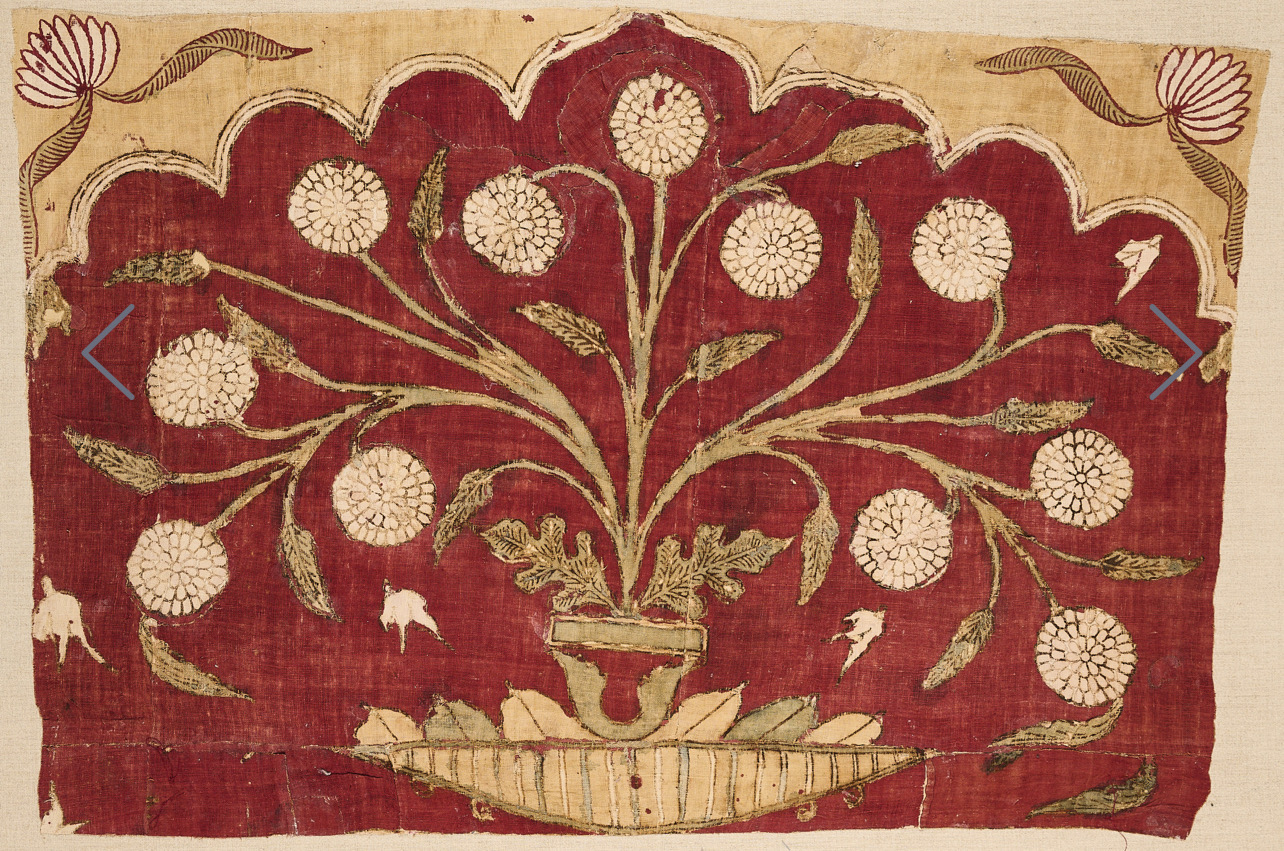
Painted and resist-dyed cotton, of rectangular form depicting a cusped arch containing a shallow vase with a chrysanthemum plant on crimson ground, stylised lotus motifs in the spandrels, laid on linen, mounted on stretcher.
The Mughal emperors were descendants of Central Asian nomads, accustomed to living in soft, portable architecture. Housed in grand tent cities, the imperial court moved between multiple capitals, visited the provinces, and followed war campaigns. Tents were made for every conceivable purpose, and many of them were lavishly decorated. This impressive block-printed and hand-dyed textile is a section of a tent wall or canvas enclosure known as a qanat. A series of these panels would have been sewn together, and the fabric wall would have appeared as a running arcade of large, flower-filled niches. This panel may have belonged to a Mughal ruler or to a provincial potentate.
Accession No
Date
Dimensions
Attribution

