
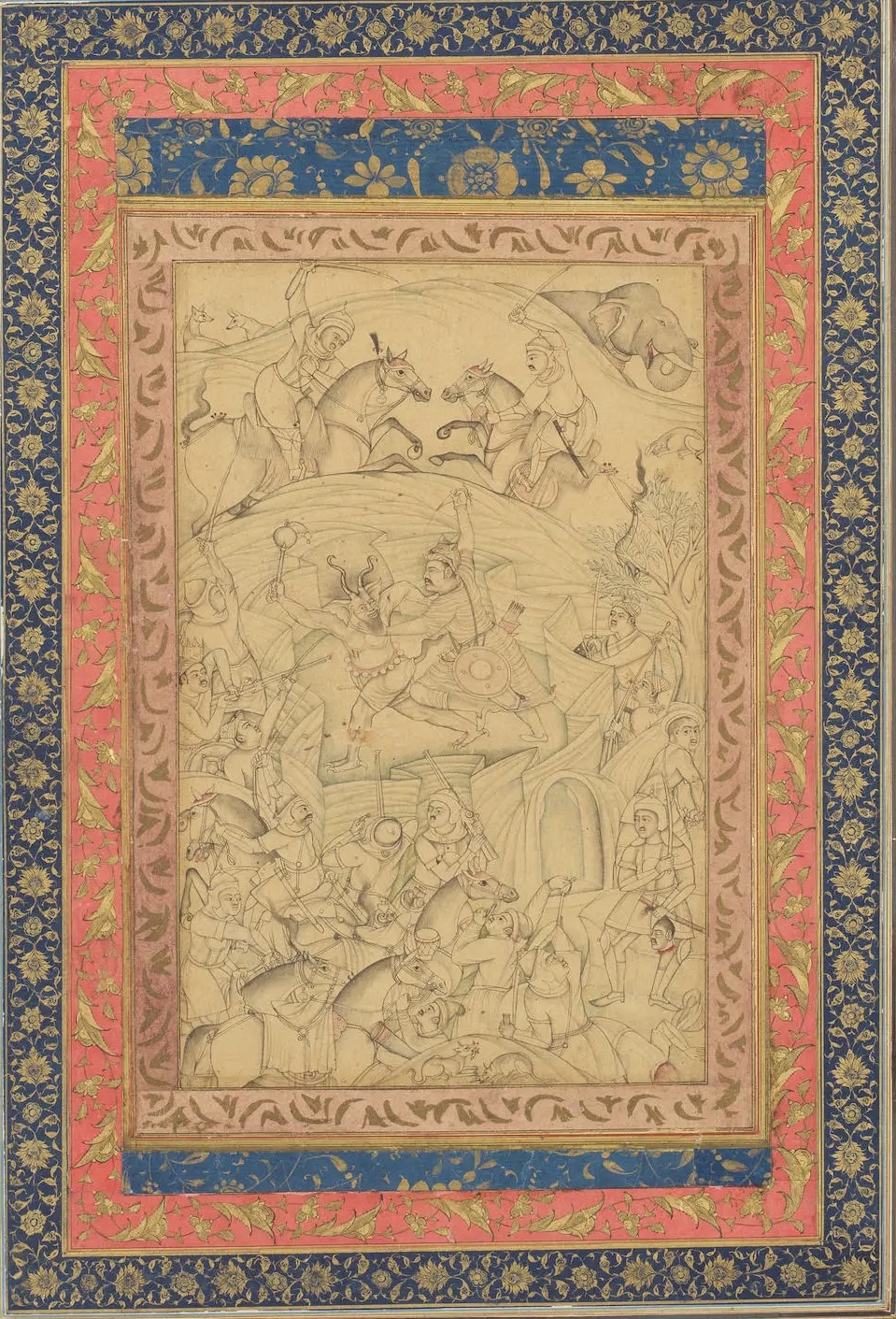
Shahnameh (or Shahnama), written by the Persian poet Firdausi around the 10th century, is one of the longest epic poems ever written, consisting of around 50,000 rhyming couplets. It tells the mythical and historical past of Persia (modern-day Iran) from the creation of the world until the Islamic conquest of Persia in the 7th century. The work is central to Persian culture and identity, blending myth, history, and moral lessons. Through stories of kings and heroes, including famous figures like Rustam and Sohrab, Firdausi explores themes of justice, loyalty, love, and heroism, encapsulating the ancient Persian worldview. The Shahnameh has greatly influenced Persian literature, art, and national consciousness, remaining a timeless and celebrated piece in Persian cultural heritage.
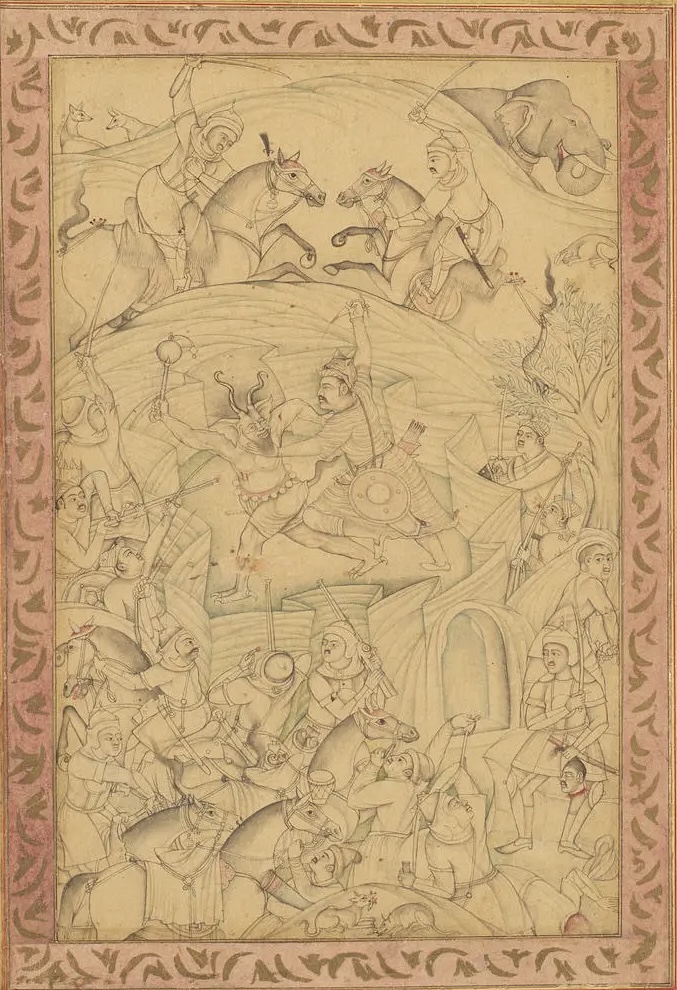
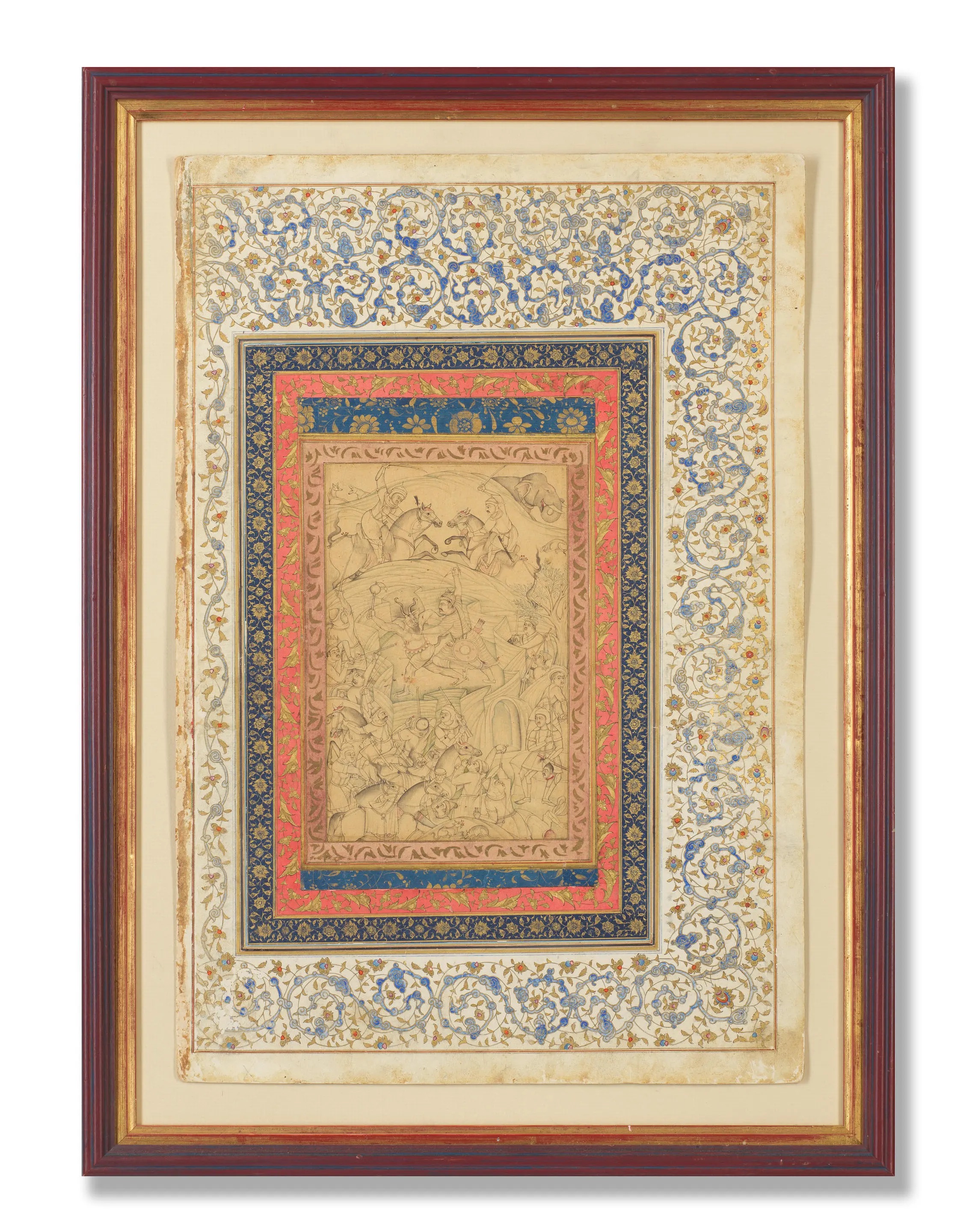
Rustam's slaying of the Div Arzhang, depicted in the present folio, is a pivotal moment in the Seven Labors (Haft Khan) of Rustam, where he must overcome various supernatural trials to rescue the captured Persian king, Kay Kavus. The Div Arzhang is a fearsome demon, commanding dark magic and instilling terror. Rustam, known for his unmatched strength and valor, confronts Arzhang in a fierce battle. With his courage and might, Rustam kills the demon, marking a victory of good over evil. This act not only displays Rustam's heroism but also his role as a protector of Persia, showcasing the values of bravery and righteousness celebrated throughout the Shahnameh.
This page displays an excellent example of the ‘Nim Qalam’ style of drawing. Nim Qalam ("half pen") drawings in Mughal art are a distinctive style characterized by their delicate, monochromatic, and often minimalist approach, using fine brushwork with a single color, usually black or sepia ink. Unlike vibrant Mughal miniatures, nim qalam drawings emphasize subtlety, shading, and tonal contrasts, creating depth and detail through controlled, light strokes rather than color. This technique was commonly used for portraiture, studies of nature, and architectural renderings. These drawings allowed artists to capture intricate details and realistic expressions, reflecting the Mughal appreciation for elegance and refinement in art. Nim qalam works often display a Persian influence, blending seamlessly into the unique aesthetic of Mughal visual culture.
The present page relates very well to an earlier Nim Qalam drawing of the same scene, exhibited in the Great Mughals exhibition in the Victoria and Albert Museum in 2024-2025
Accession No
Dimensions
Date
Medium
-1777377436.jpg)


