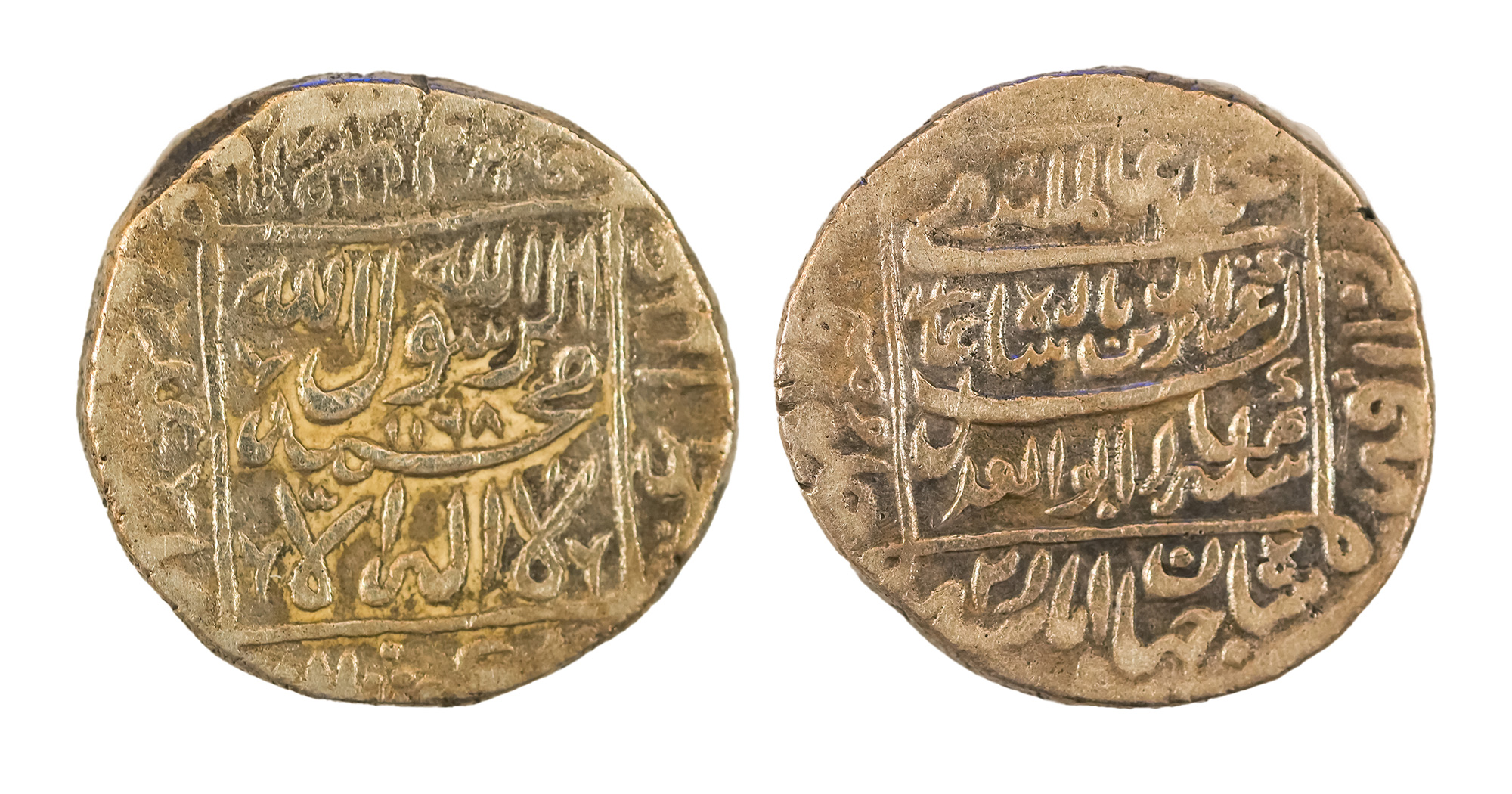
AH 1167 - 1173 / AH 1754 - 1759
Alamgir II, whose real name was Aziz-ud-Din, was the 14th Mughal Emperor of India, reigning from 3 June 1754 to 29 November 1759. He ascended the throne after the deposition of Ahmad Shah Bahadur. Alamgir II's reign was marked by a constant struggle to assert his authority and maintain stability in the Mughal Empire.
During his rule, the empire faced threats from regional powers and internal factions. Alamgir II attempted to centralize power and reform the administration, but his efforts were hindered by the powerful nobles and courtiers who wielded significant influence.
In 1756, Ahmad Shah Durrani invaded India once again and captured Delhi and plundered Mathura. While the Marathas became more powerful because of their collaboration with Imad-ul-Mulk, and dominated the whole of northern India. This was the peak of the Maratha expansion, which caused great trouble for the Mughal Empire, already weak with no strong ruler.
Relations between Alamgir II and his usurping vizier, Imad-ul-Mulk had now deteriorated, their troubled relation would culminate in the murder of Alamgir by Imad-ul-Mulk in 1759. Alamgir II's son Ali Gauhar escaped persecution from Delhi, while Shah Jahan III was placed on the throne.
Alamgir II's rule reflects the turbulent times of the Mughal Empire, marked by political intrigues, power struggles, and declining central authority. His inability to effectively tackle these challenges contributed to the further weakening of the Mughal dynasty during the 18th century.
 Regular coinage